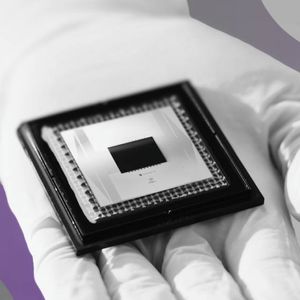
BitcoinWorld CES 2026 Unveils Stunning AI Revolution: Nvidia’s Rubin, AMD’s Chips, and Razer’s Avatars Dominate Las Vegas The Consumer Electronics Show 2026 in Las Vegas has officially opened its doors, marking a pivotal moment where artificial intelligence transitions from software promise to tangible, physical hardware. Consequently, the world’s leading tech companies, including Nvidia, AMD, and Razer, are showcasing products that embed AI directly into chips, robots, and everyday devices. This year’s event solidifies AI not as a niche feature but as the foundational layer for next-generation computing, autonomous systems, and consumer electronics. CES 2026 Establishes AI as the Core Computing Paradigm The Las Vegas Convention Center, buzzing with activity from January 5th, 2026, presents a clear industry consensus. Furthermore, AI integration is now the primary driver for innovation across all sectors. Nvidia’s keynote, delivered by CEO Jensen Huang, set the tone by emphasizing this physical-world AI shift. The company’s announcements move beyond data centers, targeting autonomous vehicles and general-purpose robotics. Similarly, AMD’s focus on personal computers aims to democratize AI processing power for consumers. This strategic alignment among chipmakers indicates a mature, hardware-first phase of the AI revolution, moving computational demands directly onto new silicon architectures. The Hardware Foundation: Nvidia’s Rubin and AMD’s Ryzen AI Nvidia unveiled its next-generation Rubin computing architecture, scheduled to replace the current Blackwell architecture in late 2026. The Rubin platform promises significant upgrades in processing speed and memory bandwidth, specifically engineered for escalating AI model complexity. Senior AI Editor Russell Brandom notes that Rubin’s design prioritizes energy efficiency per computation, a critical factor for scaling AI deployments. Concurrently, Nvidia introduced the Alpamayo family of open-source AI models for autonomous vehicles. This initiative, as Senior Reporter Rebecca Bellan observes, mirrors a strategy to establish Nvidia’s ecosystem as a universal platform, akin to Android for robots. AMD, led by Chair and CEO Lisa Su, countered with a strong push into the personal computing space. The company showcased its Ryzen AI 400 Series processors, designed to bring robust AI acceleration to laptops and desktops. Senior Reporter Rebecca Szkutak detailed AMD’s partnerships, including collaborations with OpenAI and Luma AI, to optimize software for this new hardware. The key differentiator for AMD is local processing; these chips enable complex AI tasks to run directly on a user’s device without constant cloud dependency. This approach enhances privacy, reduces latency, and makes advanced AI features accessible offline. Company Key Announcement Target Sector Expected Impact Nvidia Rubin Architecture & Alpamayo AI Models Data Centers, Autonomous Vehicles, Robotics Higher efficiency AI training and real-world agent deployment AMD Ryzen AI 400 Series Processors Consumer PCs & Laptops Democratization of on-device AI processing for everyday users Razer Project AVA & Project Motoko Consumer Gaming & Lifestyle Novel AI-human interaction through avatars and ambient interfaces Robotics and AI Converge with Major Partnerships Beyond silicon, CES 2026 highlights the fusion of advanced robotics with cutting-edge AI software. A significant announcement came from Hyundai and Boston Dynamics, who revealed a partnership with Google’s AI research lab. This collaboration will focus on training and operating the Atlas robots using Google’s advanced AI models. Transportation Editor Kirsten Korosec reports that the partnership aims to enhance the robots’ dexterity, decision-making, and ability to learn from complex, unstructured environments. A new iteration of the Atlas robot was demonstrated on stage, showcasing more fluid movements and adaptive behaviors. This move signals a shift from pre-programmed robotics to systems that learn and adapt in real-time, a crucial step for applications in logistics, manufacturing, and emergency response. Amazon’s Expansive AI Ecosystem Push Amazon is leveraging CES to expand its AI ecosystem aggressively. The company is pushing its Alexa+ service, an AI-centric upgrade, beyond smart speakers. Consumer Editor Sarah Perez details the launch of Alexa.com for Early Access, bringing the chatbot to web browsers, alongside a revamped dedicated app. This strategy aims to make Alexa+ a ubiquitous text-based assistant. Additionally, Amazon announced updates to Fire TV and new Artline TVs, all deeply integrated with Alexa+ for voice and contextual control. On the security front, Ring introduced several features, including proactive fire alerts and an app store for third-party camera integrations, as reported by Consumer Reporter Ivan Mehta. These moves demonstrate Amazon’s intent to embed AI across home entertainment, security, and general web interaction. Consumer Oddities and New Entrants Define the Show Floor While AI dominates the narrative, CES retains its tradition of showcasing innovative, and sometimes quirky, consumer hardware. Razer, known for its extravagant reveals, joined the AI wave with two conceptual projects. Project Motoko is an ambient computing interface designed to function like smart glasses but without a wearable screen, projecting contextual information into the user’s environment. Project AVA, however, is more avant-garde; it proposes a physical avatar for an AI companion that sits on a user’s desk. These concepts explore new frontiers for human-AI interaction beyond screens and speakers. In a notable first, Lego made its CES debut with a behind-closed-doors showcase of its Smart Play System. Senior Writer Amanda Silberling reported that the system includes interactive bricks, tiles, and Minifigures that can communicate with each other and play sounds. The inaugural sets feature a Star Wars theme, blending physical play with digital feedback. This move represents the growing trend of “phygital” experiences, where tangible objects are enhanced by seamless digital layers, appealing to both educational and entertainment markets. Analysis: The Tangible Impact of CES 2026 Announcements The announcements at CES 2026 have immediate and long-term implications for both industry and consumers. Firstly, the new chip architectures from Nvidia and AMD will trickle down into products within 12-18 months, making powerful AI capabilities standard in servers, cars, and computers. Secondly, the robotics partnerships indicate a accelerated timeline for deploying intelligent machines in commercial settings. Finally, the consumer-facing AI from Amazon and Razer, while partially conceptual, tests market readiness for more intimate and pervasive AI interactions. The collective output of the show points to a future where AI is not an app you open, but an embedded, ambient layer of functionality in every piece of technology. Conclusion CES 2026 in Las Vegas has successfully framed the upcoming year as a turning point for integrated artificial intelligence. The transition from software-centric AI to specialized hardware, as seen with Nvidia’s Rubin and AMD’s Ryzen AI, provides the necessary foundation for widespread adoption. Meanwhile, collaborations like Boston Dynamics and Google bring sophisticated AI reasoning to advanced robotics. From Amazon’s ecosystem expansion to Razer’s experimental concepts, the show demonstrates that AI’s next challenge is user experience and tangible utility. Ultimately, CES 2026 proves that the AI revolution is being built, quite literally, chip by chip and robot by robot. FAQs Q1: What is the most significant chip announcement at CES 2026? A1: Nvidia’s unveiling of the Rubin computing architecture is arguably the most significant, as it sets the roadmap for next-generation AI data center and autonomous vehicle hardware, succeeding the current Blackwell platform. Q2: How is AMD’s approach to AI different from Nvidia’s at CES? A2: AMD is focusing on bringing AI acceleration directly to consumer personal computers with its Ryzen AI 400 Series, enabling on-device processing. Nvidia is targeting broader infrastructure, including data centers, autonomous vehicles, and generalist robotics platforms. Q3: What was the key surprise partnership announced at the show? A3: The collaboration between Boston Dynamics (and Hyundai) with Google’s AI research lab to train and operate Atlas robots was a major surprise, combining leading-edge hardware with advanced AI software expertise. Q4: Is Amazon’s Alexa becoming a web-based service? A4: Yes, Amazon announced Alexa.com for Early Access, which will bring its Alexa+ AI chatbot to web browsers, marking a significant expansion beyond voice-first devices in the home. Q5: What does Razer’s Project AVA represent for the future of AI? A5: Project AVA is a conceptual exploration of giving AI a persistent physical presence as a desktop avatar. It represents a move towards more personalized and companion-like interactions with artificial intelligence, beyond purely utilitarian functions. This post CES 2026 Unveils Stunning AI Revolution: Nvidia’s Rubin, AMD’s Chips, and Razer’s Avatars Dominate Las Vegas first appeared on BitcoinWorld .