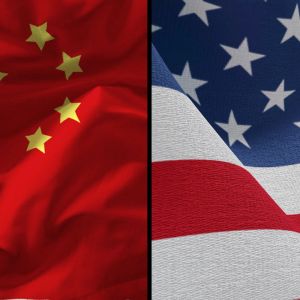
Just before Trump takes office, China has developed means to fight back. The nation has prohibited the export of dual-use products to 28 US defense contractors and classified 10 of them as “unreliable entities.” The list includes General Dynamics, Boeing Defense, Space & Security, Lockheed Martin Corporation, and Raytheon Missiles & Defense. Today , Beijing’s Ministry of Commerce said, “To safeguard national security and interests, and fulfill international obligations including non-proliferation, [the latest action was taken] based on China’s export control law and regulation on export control of dual-use items.” Additionally, the spokesperson added Beijing “has always handled the unreliable entity list issue prudently, targeting only a small number of foreign entities that endanger China’s national security.” The ministry added, “Honest and law-abiding foreign entities have nothing to worry about.” Still, is China just responding to Trump’s threats and has decided to fight first? Can these two nations really do without one another? The ten of Beijing’s unreliable entities According to a separate commerce ministry statement, ten of the defense contractors were also included in Beijing’s unreliable entities list due to weapons sales to Taiwan. This, in addition to the defense and aerospace firms, were included in the sanctions list issued by Beijing’s foreign ministry late last year. This was also in reaction to persistent US arms shipments to Taiwan. Beijing considers Taiwan to be a part of the country, which can be unified through force if required. Most countries, including the United States, do not acknowledge the self-governing island as a sovereign state. However, Washington opposes any attempt to capture Taiwan by force and is constitutionally obligated to provide it with weaponry. The list includes five subsidiaries of Lockheed Martin and three of General Dynamics, as well as Raytheon Missile Systems and a joint venture between Lockheed Martin and Raytheon. This means that these enterprises are banned from engaging in mainland China-related import and export activities, as well as making new investments in the nation. Their senior executives are also banned from entering China. Also, their Chinese work or resident permits will be rejected or canceled. The ministry stated, “The so-called military technology cooperation seriously undermines China’s national sovereignty and territorial integrity, violates the one-China principle and the provisions of the three joint communiques between China and the US, and significantly threatens peace and stability in the Taiwan Strait.” 🇺🇸🇹🇼BIDEN APPROVES $567 MILLION IN SECURITY AID FOR TAIWAN The aid package is expected to bolster Taiwan's military preparedness and support ongoing efforts to strengthen U.S.-Taiwan relations in the face of increasing regional threats. Source: White House pic.twitter.com/eS2K5vtEZm — Mario Nawfal (@MarioNawfal) September 30, 2024 Notably, in December, US President Joe Biden agreed to provide $571.3 million in defense support to Taiwan. The ministry spokesperson responded that the actions “interfere in China’s internal affairs and undermine China’s sovereignty and territorial integrity.” China and the US: An eye for an eye Beijing has taken a more confrontational attitude as it prepares for a second presidential term with Donald Trump. He is a vocal opponent of China and its economic might. For instance, Chinese regulators have investigated Nvidia , an American computer processor company. Additionally, the export of rare minerals to the United States has been prohibited. Individual companies have also been targeted to reveal their supply chain vulnerabilities. The measures are a component of an economic tit-for-tat that has intensified in recent months. It commenced during Trump’s inaugural term, following his implementation of trade restrictions and tariffs against the Asian country. Beijing’s responses to retaliation were predominantly symbolic and measured at that time. Since then, the Biden administration has imposed prohibitions on dual-use products and expanded its restrictions on Chinese companies. Recently, it has targeted 140 Chinese companies. However, in recent years, the country has established the legal framework to replicate Washington’s strategies. It has established sanctions and blacklists that can deny American companies access to essential resources. Beijing is currently demonstrating a greater willingness to take action as it responds to Trump’s harsh tariffs. During his presidential campaign, Trump said that he would impose tariffs of 60% or more on goods coming from China. Land a High-Paying Web3 Job in 90 Days: The Ultimate Roadmap