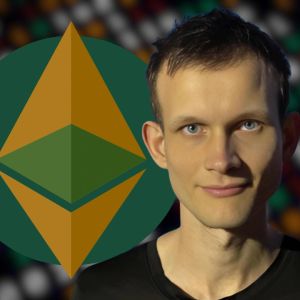
Ethereum co-founder Vitalik Buterin shared on X today that he believes zk-EVMs are going to become the main way Ethereum validates blocks between 2027 and 2030. “The trilemma has been solved – not on paper, but with live running code, of which one half (data availability sampling) is on mainnet today, and the other half (ZK-EVMs) is production-quality on performance today – safety is what remains,” said Vitalik. Vitalik compared Ethereum’s situation to peer-to-peer networks that came long before it, like “BitTorrent (2000): huge total bandwidth, highly decentralized, no consensus.” Ethereum starts large gas limit increases in 2026 through BALs and ePBS Vitalik then pointed to Bitcoin in 2009, saying:- “Bitcoin (2009): highly decentralized, consensus, but low bandwidth because it’s not “distributed” in the sense of work being split up, it’s replicated. Now, Ethereum with PeerDAS (2025) and ZK-EVMs (expect small portions of the network using it in 2026), we get: decentralized, consensus and high bandwidth. But now it’s time to talk about what this combination means for Ethereum.” Vitalik said these upgrades are already running code, not theory. Data availability sampling is active on mainnet today. zk-EVMs already hit production performance levels. Safety checks are the final step, and Vitalik traced that work back ten years, starting with his first data availability research commit and later zk-EVM experiments that began around 2020. The rollout plan is staged. In 2026, Ethereum expects large gas limit increases that do not depend on zk-EVMs, driven by BALs and ePBS. That same year should also bring the first chances to run a zk-EVM node on parts of the network, according to Vitalik. From 2027 through 2030, Ethereum plans even larger gas limit jumps as zk-EVMs become the main block validation method. “ZKEVM becomes the primary way to validate blocks on the network,” Vitalik wrote. Another piece is distributed block building. Vitalik said the long-term goal is a setup where a full block is never built in one place. He said this is not urgent, but worth building toward. In Vitalik’s words:- “Even before that point, we want the meaningful authority in block building to be as distributed as possible. This can be done either in-protocol (eg. maybe we figure out how to expand FOCIL to make it a primary channel for txs), or out-of-protocol with distributed builder marketplaces. This reduces risk of centralized interference with real-time transaction inclusion.” Vitalik said that it also improves geographic fairness. The Ethereum Foundation has it stated on its website that higher gas limits on Ethereum are made safe by zk-EVMs increase capacity, cut congestion, and stabilize fees. The Foundation said :- “Bringing zkEVMs to L1 is a multi-faceted effort. Our work is organized into three core workstreams, with parallel progress on client implementations.” Don’t just read crypto news. Understand it. Subscribe to our newsletter. It's free .