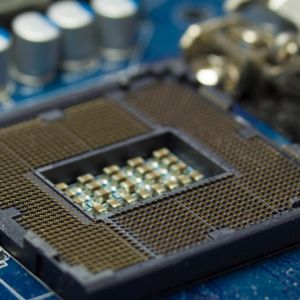
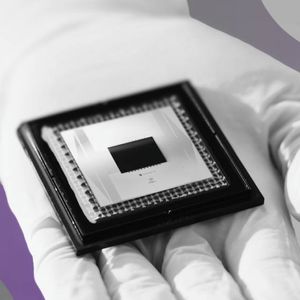
Nvidia has reportedly begun privately testing location verification technology for its artificial intelligence chips. Its newest Blackwell chips are expected to be the first to receive its location tracking feature, effectively deterring smugglers from transporting the advanced chips to banned countries. The new feature would work as optional software that data center operators could install on their systems. According to a Reuters report, Nvidia has developed location verification technology for its artificial intelligence chips that could help stop smugglers from moving restricted hardware to banned countries like China. The company has been demonstrating the software privately in recent months but has not yet released it to customers. According to sources familiar with the matter, the software measures the time delay in communications between the chips and Nvidia’s servers to estimate where the chips are located, similar to how other internet services determine location. Has Nvidia introduced location tracking in its chips? “We’re in the process of implementing a new software service that empowers data center operators to monitor the health and inventory of their entire AI GPU fleet,” Nvidia said in a statement. “This customer-installed software agent leverages GPU telemetry to monitor fleet health, integrity and inventory.” The location tracking feature will first become available on Nvidia’s newest Blackwell chips, which include more advanced security features for a process called attestation. Nvidia is also looking at ways to add the capability to its older Hopper and Ampere chip generations. Over the past year, the U.S. Department of Justice (DOJ) has brought multiple criminal cases against China-connected smuggling networks that have tried to move advanced AI chips worth more than $160 million to China. Authorities announced Operation Gatekeeper this week, and so far it has led to the arrest of two Chinese nationals and the seizure of over $50 million in advanced Nvidia chips and cash. Between October 2024 and May 2025, smugglers exported and attempted to export at least $160 million worth of Nvidia H100 and H200 chips to China. The smugglers used fake companies, falsified shipping documents, and routed the contraband chips through third countries to avoid detection. In November, federal prosecutors charged four people with smuggling around 400 Nvidia A100 processors to China between October 2024 and January 2025. Law enforcement also disrupted two additional shipments that would have included supercomputers with H100 GPUs and H200 chips. The defendants allegedly received over $3.8 million in wire transfers to fund their operations. In July, China’s top cybersecurity regulator summoned Nvidia to ask if its products contained backdoors that would allow the U.S. to bypass security features. The Chinese regulator pointed out that U.S. lawmakers have previously made demands for tracking features. He also cited claims from U.S. AI experts about mature remote control technologies. Nvidia has strongly denied that its chips have backdoors. “Cybersecurity is critically important to us. Nvidia does not have ‘backdoors’ in our chips that would give anyone a remote way to access or control them,” the company stated. Trump’s H200 export policy President Donald Trump announced this week that he would allow Nvidia to export its H200 chips to approved customers in China, reversing the restrictions imposed during Biden’s tenure. Trump said the policy would require a 25% cut to the U.S. and would also apply to other chipmakers like AMD and Intel. He claimed Chinese President Xi Jinping “responded positively” to the proposal. The H200 is more advanced than the H20 chips previously allowed for export to China, but less powerful than Nvidia’s cutting-edge Blackwell and Rubin chips. A group of senators has called Trump’s decision a “colossal economic and national security failure,” arguing the H200 chips would give Chinese AI firms a meaningful performance boost. Think tank analysis suggests that the current advantage the U.S. has in AI computing power over China could shrink from ten times to five times if H200 exports are allowed. Cryptopolitan reports that Beijing plans to limit access to H200 chips through an approval process. Chinese regulators have been working to reduce reliance on foreign AI chips and have banned Nvidia and other imported processors from being used in new state-funded data center projects. China is also accelerating its domestic chip production with plans to triple its AI chip output by 2026. Get $50 free to trade crypto when you sign up to Bybit now