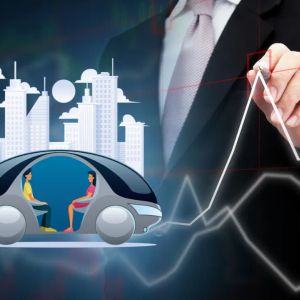
For years, the self-driving car industry has been hyped as the next big thing in AI, with promises of robotaxis replacing human drivers and billions of dollars pouring into companies that swore the tech was ready to roll. General Motors (GM) was reportedly at the centre of it all. With Cruise, its autonomous vehicle (AV) division, GM said it was leading the charge into a driverless future. But in December, CEO Mary Barra delivered news that hit like a car crash: Cruise was shutting down. GM folded Cruise’s operations into its broader software development division, calling it a “realignment.” The real message? Their robotaxi ambitions were dead in the water. Barra spun it as a forward-looking move, claiming it would “accelerate the path forward.” Cruise’s crash course in failure Cruise was a full-scale bet on the future. Barra had hyped the company’s robotaxis as imminent game-changers. At the 2023 South by Southwest Conference, she declared, “We’re here. It’s happening now.” GM projected an extra $50 billion in annual revenue from robotaxis by 2030, doubling its existing $50 billion income. It sounded revolutionary. But as it turns out, the numbers were more fantasy than reality. At its peak, the division operated a few hundred vehicles, all monitored by thousands of human staff working remotely. These cars couldn’t navigate highways or complex urban roads, and they repeatedly caused traffic jams and safety issues. In one incident, a Cruise vehicle interfered with emergency responders. In another, a car stopped mid-drive in San Francisco, blocking traffic for hours. And then came the crash that sealed its fate. In late 2023, a Cruise-operated car hit a pedestrian who had been struck by another vehicle. The autonomous car braked but dragged the woman 20 feet before stopping. She survived but was hospitalized with severe injuries. Cruise settled a lawsuit for $10 million and paid fines for withholding details about the accident. By the time GM pulled the plug, Cruise was a PR nightmare and a financial sinkhole. But Cruise wasn’t alone in its struggles. Waymo, Alphabet’s driverless car subsidiary, has faced similar issues. Waymo’s cars are limited to a maximum of 45 miles per hour and still require human oversight. In one embarrassing incident, a Waymo robotaxi in Los Angeles circled endlessly in a parking lot until a human operator stepped in. Alphabet doesn’t disclose Waymo’s losses, but its “other bets” division, which includes Waymo, has burned through $37 billion since 2016. Billions down the drain, and no driverless future in sight Despite years of testing and more than $100 billion invested across the industry, these companies haven’t solved critical challenges. The so-called edge cases are a prime example. Autonomous vehicles struggle to handle situations like bad weather or instructions from emergency workers—scenarios that human drivers manage daily. Early demos in the mid-2000s suggested these issues were nearly solved. But two decades later, the tech still isn’t ready. The broader AI industry is grappling with similar issues, especially as companies race to develop large language models like OpenAI’s ChatGPT. These systems, much like autonomous vehicles, are prone to errors that require human oversight. In the self-driving world, there’s “phantom braking,” where cars stop unexpectedly. Chatbots have their version of this: “hallucinations.” These are made-up facts or outright falsehoods generated by the AI. Both issues highlight the same problem: these technologies aren’t as smart—or reliable—as they’re made out to be. And just like in the AV industry, the financials don’t look great for AI chatbots. OpenAI, the most high-profile AI company, is valued at $160 billion but loses billions annually. The parallels don’t end there. Self-driving cars were sold as tools to replace human drivers, and chatbots aim to replace customer service agents, journalists, and other professionals. Both industries rely on AI that’s not yet capable of fully replacing humans, making their business models shaky at best. The human element remains irreplaceable One of the most glaring issues with self-driving cars is their inability to handle real-world scenarios that humans navigate effortlessly. The San Francisco crash involving a Cruise vehicle is a prime example. After hitting a pedestrian, the car failed to act like a human driver would—stopping immediately to assess the situation. This inability to replicate human judgment has broader implications. It shows how far AI still has to go, not just in driving but in any application where real-time decision-making is critical. AI-powered chatbots, for instance, struggle with nuance and context, often producing responses that are nonsensical or even harmful. Mark Zuckerberg’s AI characters, designed to keep users engaged on his social media platforms, are another example. These virtual personalities may be entertaining, but they don’t replace real human interaction. Instead, they push users further into artificial environments, raising questions about the long-term effects of AI on society. The failure of self-driving cars should serve as a warning to AI investors. The technology, while impressive in controlled settings, falls apart in the real world. From Zero to Web3 Pro: Your 90-Day Career Launch Plan