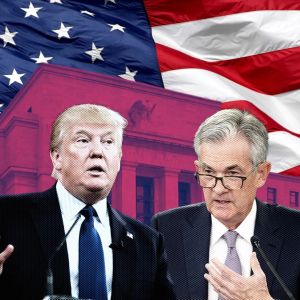
Federal Reserve Chair Jerome Powell is tiptoeing through a minefield as Donald Trump barrels toward his second term as president. The central bank is trying to maintain its image of neutrality while secretly bracing for the economic chaos Trump’s policies could unleash. Powell claims the Fed won’t speculate on Trump’s plans, but insiders reportedly say a different game is being played behind the scenes. After Trump’s November win, Powell went on the defensive, insisting the Fed wouldn’t adjust interest rates based on “guesswork” about future trade and immigration policies. “We don’t guess, we don’t speculate, and we don’t assume,” Powell announced at a press conference. But as the dust settles, the Fed’s actions suggest otherwise. Trump’s upcoming term is already affecting its inflation forecasts and interest-rate decisions. Fed’s mixed signals Last week, the Fed cut rates by another quarter point, making a full percentage point cut since September. Powell’s message was that the economy still needs some help. But projections released alongside the cut show a more hawkish stance for the future. Officials are now predicting only two rate cuts in 2025 and two more in 2026, down from earlier expectations of four cuts next year. The inflation numbers don’t help. The Fed now expects inflation (excluding volatile food and energy prices) to dip to 2.5% in 2025, worse than the 2.2% forecast just months ago. And here’s the thing: 15 out of 19 Fed officials now believe inflation could overshoot their forecasts. Back in September, only three saw that risk. Behind closed doors, Fed officials are sweating over the potential for Trump’s trade and immigration policies to undo recent progress. Powell, however, is playing coy, pointing to firmer inflation readings as the culprit. Meanwhile, the labor market and supply chains—two big factors in the inflation cool-down—could unravel. Powell himself admitted during a press conference that the Fed’s current-year inflation projections had “kind of fallen apart.” Trump’s immigration policies loom large over inflation Trump’s plans to crack down on immigration have Fed officials especially worried. His promises of mass deportations and stricter border controls could shrink the labor pool, tighten the job market, and send wages soaring. The supply-side expansion, which had been keeping inflation in check, could be thrown into reverse. Governor Adriana Kugler, known for her hawkish tendencies, hasn’t been shy about her concerns. While she backed a half-point rate cut in September, she recently hinted that further easing might not be possible if labor-force growth stalls. The Fed’s models show a tight labor market could lead to higher prices, putting pressure on businesses to pass those costs to consumers. Powell, however, has been trying to keep his colleagues from linking Fed policies directly to Trump’s moves. Behind the scenes, he’s urging restraint, hoping to avoid the appearance of political bias. “We need to focus on the data, not the politics,” Powell reportedly told colleagues. The memory of 2018 is fresh in many minds. During Trump’s first term, his trade war forced the Fed to lower rates to offset its economic impact. But this time, things are different. Inflation is no longer an abstract threat. Businesses and consumers are already wary of rising prices, making the Fed’s job even trickier. Stress tests expose cracks in the banking system While inflation and labor concerns dominate headlines, the Fed is also grappling with cracks in the banking system. The 2023 panic among mid-sized banks exposed weaknesses in the system’s ability to handle rapid rate hikes. Stress tests, once a key tool for assessing banks’ resilience, have become a point of contention. In 2019, the Fed proposed opening up its test models to public scrutiny, arguing it would make the system more transparent. Banks pushed back, claiming the models were too rigid and encouraged “gaming” the system. The Fed eventually scrapped the idea, citing concerns over a “model monoculture.” But the debate hasn’t gone away. Banks argue that without consistent rules, they can’t make meaningful long-term changes to their portfolios. And the lawsuit filed this week against the Fed’s stress test framework only adds to the pile. Critics believe the tests are redundant, given the Fed’s other capital requirements, and could even encourage reckless behavior. Land a High-Paying Web3 Job in 90 Days: The Ultimate Roadmap